Physical Ion Milling
Inert ion beam removal for noble metals, magnetic stacks, and material systems without useful volatile etch products.
Ar ion beamNoble metalsMagnetic stacks
Equipment Platform
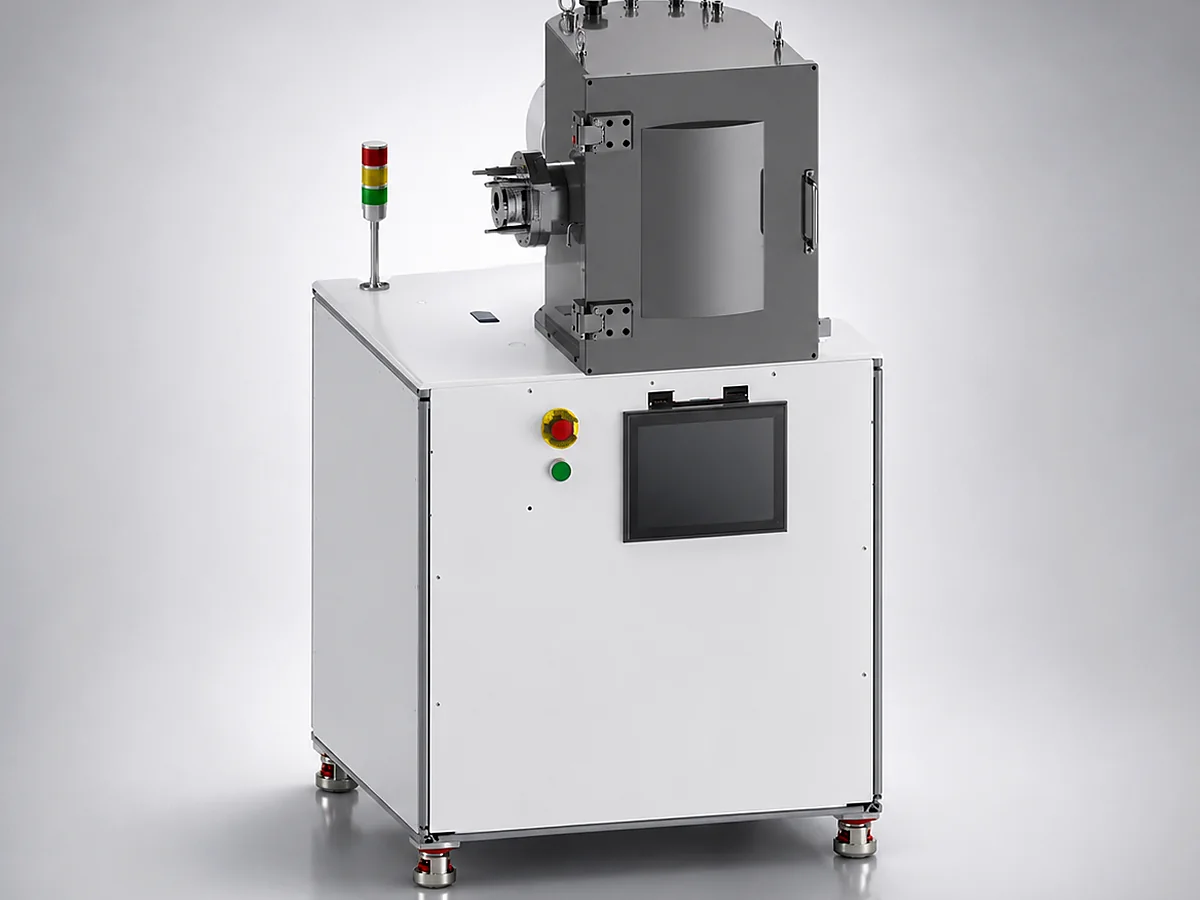
Directional ion beam etching and reactive ion beam etching for magnetic films, noble metals, optical materials, multilayer stacks, and difficult-to-etch research materials.
Ion Source
Kaufman / RF
Tilt
0-90 deg
Rotation
1-10 rpm
Base Pressure
<7x10^-7 Torr
Process-first configuration
IBE/RIBE selection starts with the material stack, desired profile angle, mask budget, redeposition risk, wafer size, endpoint needs, and whether the process requires pure physical milling or chemically assisted ion beam etching.
Inert ion beam removal for noble metals, magnetic stacks, and material systems without useful volatile etch products.
Reactive gases add chemical enhancement while retaining directional beam control for selected materials and profiles.
Tilt and rotation help tune sidewall angle, redeposition, taper, and uniformity for precision pattern transfer.
Core Process Windows
Kaufman and RF source options let teams match beam architecture to wafer size, material stack, and process energy requirements.
Programmable tilt and rotation support sidewall shaping, improved uniformity, and redeposition management across complex stacks.
Physical sputter removal supports magnetic materials, Au, Pt, Cu, glass, quartz, 2D materials, and quantum device materials.
Technical Specifications
Review core platform capabilities for initial process planning. Our engineering team will confirm the final source type, gas lines, loading, cooling, and endpoint options during quote review.
Applications
Magnetic materials
Noble metal patterning
Optical device fabrication
MEMS / NEMS
Multilayer film etching
2D and quantum materials
Research evidence
Related Resources
Resource
Kaufman vs RF sources, IBE/RIBE modes, tilt angle, and materials
Resource
Chemistry-driven RIE compared with physical ion milling
Resource
Metal-by-metal etch routes including IBE/RIBE for difficult stacks
FAQ
Choose IBE/RIBE when the material has no practical volatile reactive chemistry, when beam angle control is critical, or when magnetic, noble-metal, optical, multilayer, or 2D material stacks need directional physical milling.
IBE uses an inert ion beam for physical sputter removal. RIBE introduces reactive gases to combine directional beam control with chemical enhancement for selected material systems.
The IBE/RIBE platform supports Kaufman ion sources for up to 6 inch wafers, RF ion sources for up to 12 inch wafers, 0 to 90 degree tilt, 1 to 10 rpm rotation, base pressure below 7x10^-7 Torr, and <5% non-uniformity.
Request a quote
Share your material stack, wafer size, target sidewall profile, tilt requirements, redeposition concerns, gas needs, and timeline.