How to Choose the Right Plasma Cleaner: A Complete Buying Guide
By NineScrolls Engineering · 2026-02-15 · 14 min read · Materials Science
Selecting a plasma cleaner is a significant investment — whether for a research lab or a production line. The wrong choice can mean inadequate cleaning performance, unnecessary downtime, or overspending on capabilities you don't need. This guide walks through the key decision factors and practical considerations to help you choose a system that fits your specific requirements.
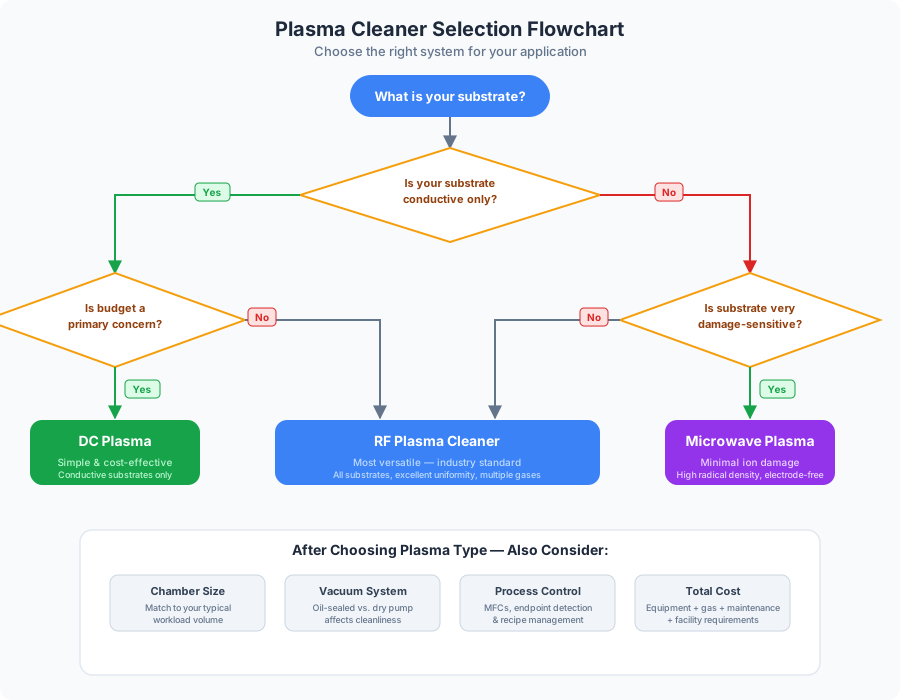
Step 1: Define Your Cleaning Requirements
Before evaluating equipment, clearly define what you need the plasma cleaner to do. The following questions will guide your selection.
What Are You Cleaning?
The substrate material determines many of your system requirements. Conductive substrates (metals, doped silicon) are compatible with all plasma types including DC systems. Insulating substrates (glass, ceramics, polymers) require RF or microwave plasma to avoid charge accumulation and arcing issues.
Consider the geometry of your parts as well. Flat wafers or coupons are straightforward to clean in most systems. Parts with complex 3D geometries, deep holes, or internal cavities may require higher pressure operation or longer treatment times to ensure plasma reaches all surfaces.
What Contaminants Are You Removing?
Organic contaminants (oils, photoresist residues, fingerprints) are effectively removed by oxygen-based plasmas. Inorganic contaminants or thin oxide layers may require argon sputtering or hydrogen plasma. If you need to remove both organic and inorganic contaminants, look for systems that support multiple gas inputs and mixed-gas operation.
Do You Need Surface Modification in Addition to Cleaning?
If your goal includes changing the surface chemistry — improving wettability, promoting adhesion, or introducing specific functional groups — the system must support the relevant process gases. Oxygen plasma increases hydrophilicity. Fluorine-containing plasmas (CF₄, SF₆) can make surfaces hydrophobic. Nitrogen and ammonia plasmas introduce amine groups for bioconjugation applications.
Step 2: Choose the Plasma Source Type
Based on your substrate and cleaning requirements, select between RF, DC, and microwave plasma sources.
Choose RF plasma if you need a versatile system that handles both conductive and insulating materials, you require good plasma uniformity, and your budget can accommodate the higher equipment cost. RF systems are the default choice for most applications.
Choose DC plasma if you are cleaning conductive materials only, you want the lowest equipment cost, and you don't need precise control over surface chemistry. DC systems are a good fit for metal cleaning in production environments where simplicity matters.
Choose microwave plasma if you are working with highly sensitive substrates that cannot tolerate ion bombardment, you need very high radical flux for fast cleaning, or you need an electrode-free design to avoid metal contamination. Microwave systems are specialized tools for demanding applications.
Step 3: Determine Chamber Size and Configuration
Chamber Volume
Match the chamber size to your typical workload. Benchtop plasma cleaners with small chambers (1–5 liters) are ideal for research labs processing individual samples or small batches. Mid-size systems (10–30 liters) serve R&D and low-volume production. Large production systems (50+ liters) handle high-volume batch processing or inline configurations.
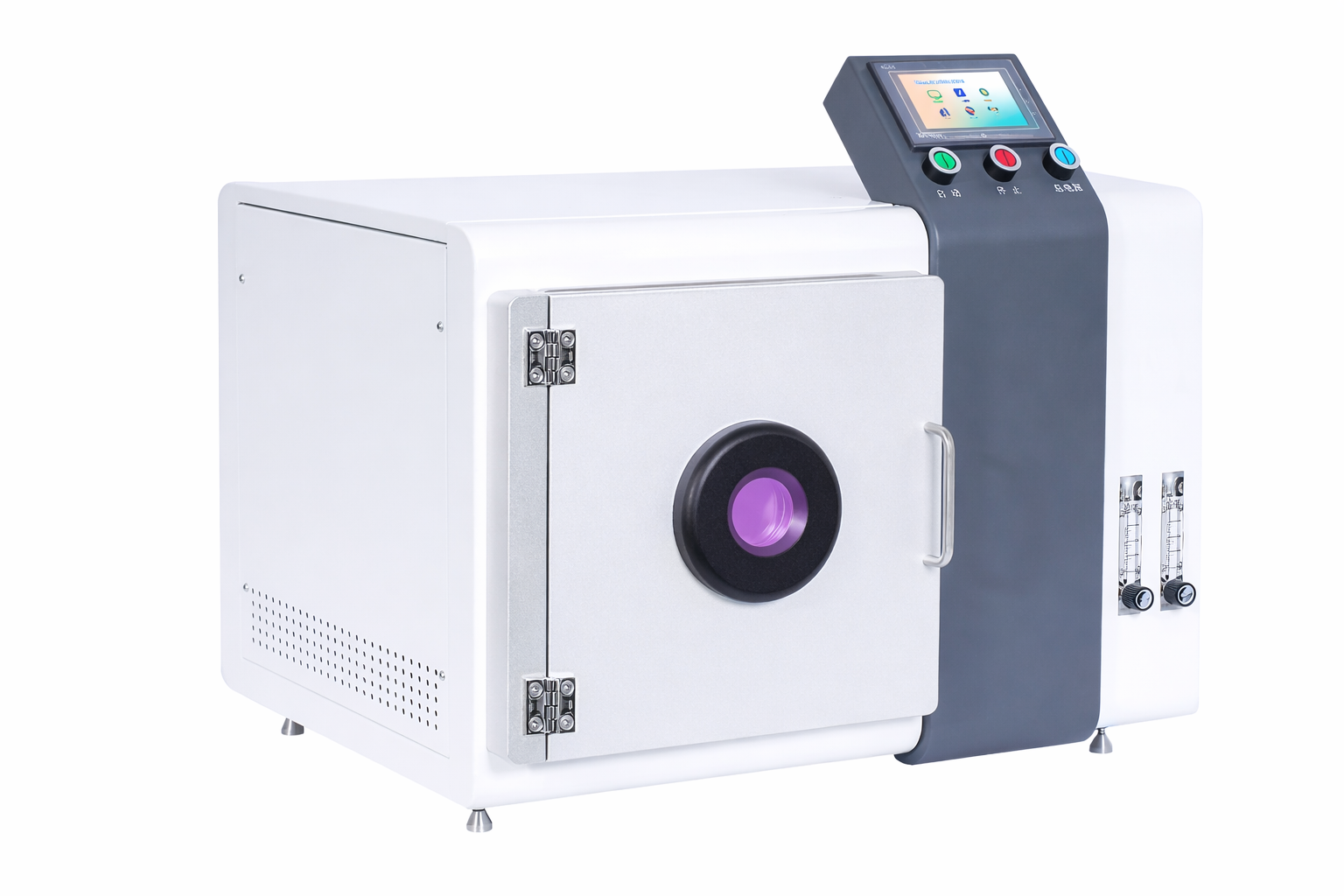
Oversizing the chamber "just in case" increases gas consumption, pump-down time, and cost. Undersizing limits your throughput and flexibility.
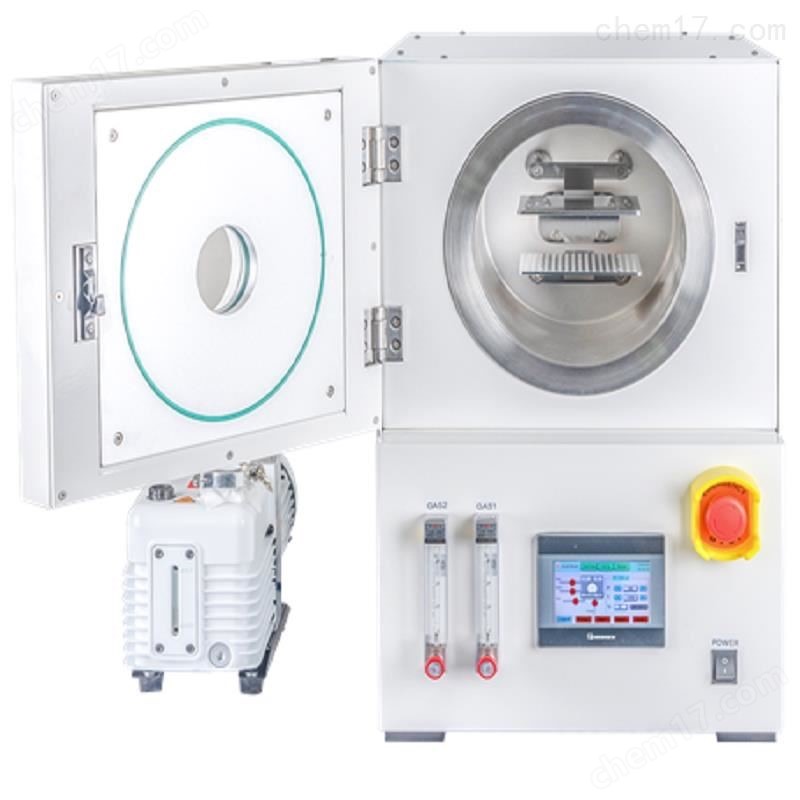
Electrode Configuration
Parallel plate systems place substrates directly between electrodes, providing the most uniform treatment for flat substrates. Barrel (cylindrical) reactors are better for treating multiple small parts simultaneously but provide less uniform treatment of individual surfaces. Downstream configurations generate plasma remotely and transport reactive species to the sample, minimizing ion damage at the cost of cleaning rate.
Step 4: Evaluate the Vacuum System
The vacuum system is often overlooked during procurement but has a major impact on daily operation and long-term cost of ownership.
Pump Type
Rotary vane pumps are the standard for most plasma cleaners. They are reliable and cost-effective, but require regular oil changes and can introduce trace oil vapor into the chamber (backstreaming). Oil-free (dry) pumps — such as scroll or diaphragm pumps — eliminate oil contamination risk and are preferred for applications requiring the highest cleanliness, such as semiconductor and medical device manufacturing.
Base Pressure
The base pressure your system can achieve before introducing process gas matters. A lower base pressure (below 50 mTorr) indicates better vacuum integrity and lower outgassing, which translates to more reproducible plasma processes. Systems that can only reach 200–500 mTorr base pressure may have leak issues or insufficient pumping speed, leading to variable results.
Pump-Down Time
For production environments, pump-down time directly affects throughput. A system that takes 10 minutes to pump down versus 2 minutes will significantly reduce the number of cleaning cycles per shift. Evaluate pump-down time with your actual load configuration, not just with an empty chamber.
Step 5: Assess Process Control and Monitoring
Power Control
At minimum, you need adjustable RF/DC power with a digital readout. Better systems offer automatic impedance matching (for RF) that maintains stable plasma conditions as chamber conditions change during processing. The best systems include closed-loop power control that adjusts power output to maintain a target plasma parameter.
Gas Flow Control
Mass flow controllers (MFCs) are essential for reproducible processes. The system should have MFCs for each process gas, with flow ranges appropriate for your chamber size. Look for systems that support at least two independent gas channels — this allows mixed-gas operation and the flexibility to run different cleaning recipes.
Process Monitoring
Endpoint detection — the ability to determine when cleaning is complete rather than relying on fixed time — is valuable for production applications. Optical emission spectroscopy (OES) monitors specific wavelengths in the plasma to detect when contaminant-related species disappear, signaling that cleaning is complete. This avoids both under-treatment and over-treatment.
Recipe Management
For production use, the system should store and recall process recipes (gas type, flow rate, power, pressure, time) to ensure consistent results across operators and shifts. Password protection and audit trail capabilities may be required for regulated industries (medical devices, aerospace).
Step 6: Consider Total Cost of Ownership
The purchase price is only part of the total cost. Factor in these ongoing expenses when comparing systems.
Consumables and maintenance. Vacuum pump oil (for oil-sealed pumps), chamber cleaning, electrode replacement, and O-ring servicing all contribute to operating costs. Dry pump systems have higher upfront costs but lower maintenance requirements.
Gas consumption. Process gas costs depend on your gas type, flow rate, and duty cycle. Specialty gases (CF₄, SF₆, forming gas) are more expensive than O₂ or Ar. Systems with better gas utilization efficiency will save money over time.
Facility requirements. Consider the infrastructure needed: compressed gas supply, exhaust ventilation (especially for fluorine-containing or hydrogen plasmas), electrical service (RF generators may require 208/230V single-phase or three-phase power), and floor space.
Downtime costs. In production environments, reliability and service response time matter. Evaluate the manufacturer's service network, spare parts availability, and warranty terms. A cheaper system that is frequently down for repair may cost more in lost production than a more expensive but reliable alternative.
Step 7: Practical Tips for Evaluation
When comparing specific systems, these practical steps can reveal differences that spec sheets don't show.
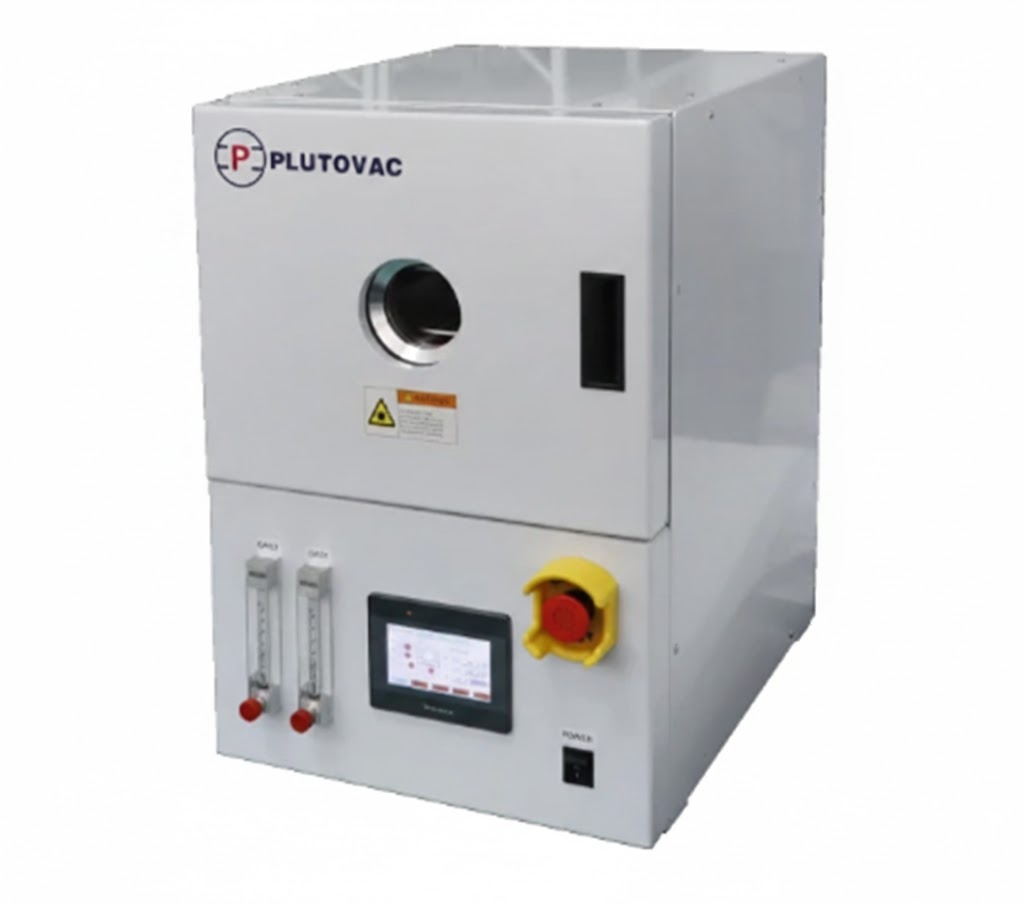
Request a demonstration with your actual parts. Results on vendor-supplied test wafers may not predict performance on your real workload. Bring representative samples with typical contamination and evaluate the results.
Measure before and after. Use contact angle measurements (a simple and inexpensive test) to quantify the surface energy change achieved by plasma treatment. This gives you an objective comparison between systems rather than relying on subjective assessments.
Ask about process development support. Especially if you are new to plasma cleaning, the vendor's willingness to help develop and optimize your process recipe is extremely valuable. Some vendors include process development as part of the system sale; others charge separately.
Check for upgrade paths. Your requirements may evolve. A system that can be upgraded with additional gas channels, a larger pump, or endpoint detection provides more long-term value than one that cannot be expanded.
Common Mistakes to Avoid
Ignoring vacuum quality. A plasma cleaner is only as good as its vacuum system. Poor vacuum leads to inconsistent plasma conditions and variable cleaning results.
Skipping process optimization. Using a "one-size-fits-all" recipe without optimizing for your specific substrate and contaminant type leaves performance on the table.
Neglecting preventive maintenance. Plasma cleaners are generally low-maintenance, but chamber walls accumulate redeposited material over time, and vacuum seals degrade. A regular maintenance schedule prevents gradual performance degradation.
Overspecifying for current needs. Buying a production-grade system for a research lab (or vice versa) wastes resources. Match the system to your actual throughput and precision requirements, with reasonable allowance for growth.
Summary
Choosing the right plasma cleaner comes down to understanding your specific requirements (see also: What Is a Plasma Cleaner?) — substrates, contaminants, throughput, and budget — and matching them to the right combination of plasma source, chamber design, vacuum system, and process control. Take the time to define your requirements clearly, request demonstrations with your actual parts, and evaluate total cost of ownership rather than purchase price alone. A well-chosen plasma cleaner will deliver consistent, reliable surface preparation for years of productive service.
References
- Fridman, A. Plasma Chemistry. Cambridge University Press (2008). ISBN 978-0521847353.
- SEMI Standard E10-0304: Guide for Measurement of Plasma Etch Uniformity. semi.org
- IPC-J-STD-001: Requirements for Soldered Electrical and Electronic Assemblies (soldering standards relevant to pre-bond plasma cleaning). ipc.org